Razed Account and KYC Guide
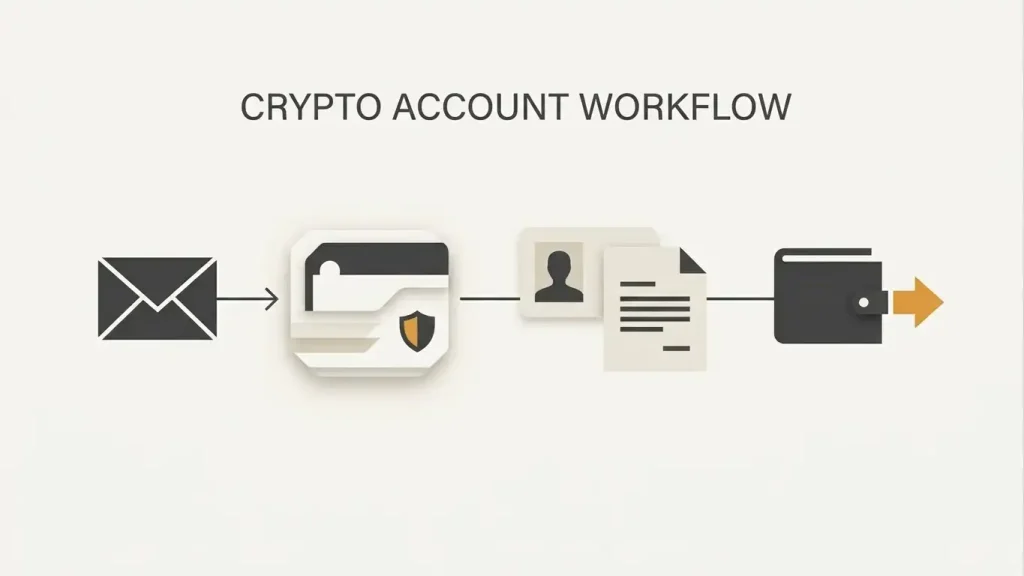
Table of Contents
- The account path starts simply and can become more demanding
- Razed can request identity, address and funding documents
- Withdrawal review is where account friction becomes visible
- Support works best when the account issue is described precisely
- Prepare for checks without sending more data than requested
- Questions about Razed accounts and KYC
- Email-first access is convenient, but cashout readiness is the real account test
Section element
Account access and verification
Razed uses an email-first account path, but identity checks can enter later in the journey. The practical question is not whether signup starts quickly; it is what information may be requested before a withdrawal is cleared.
Section element
- Signup styleEmail-first
- Identity checksRisk-based and request-driven
- Possible documentsID, address and sometimes source-of-funds information
- Support channel24/7 live chat
The account path starts simply and can become more demanding
Razed is described as allowing account creation with an email address, with crypto used for account funding. That reduces friction at the first step, but it does not determine what happens later. The useful way to think about the account is as a sequence of stages rather than a one-time signup form.
- Create access. Account access begins with registration rather than a document-upload sequence at the first screen.
- Fund and use the account. Crypto deposits are part of the core account flow. For coin choices, networks and transfer mechanics, use the dedicated Razed payments guide.
- Expect a possible review. A request for identity, address or source-of-funds material can appear later. It is not safe to assume that a signup with few document requests guarantees a withdrawal with few document requests.
- Complete the cashout path. Verification can extend the time between a withdrawal request and release of funds, which is why the withdrawal guide treats review time separately from ordinary crypto processing.
| Account stage | Typical user action | What can change the path |
|---|---|---|
| Signup | Create access with email | Account details still need to be accurate and consistent |
| Funding | Deposit crypto | Coin and network selection affect transfer handling |
| Use | Play from the funded balance | Account activity can later be reviewed |
| Review | Provide requested information | ID, address or source-of-funds material may be requested |
| Withdrawal | Request a cashout | A review can add time beyond normal blockchain processing |
Razed can request identity, address and funding documents
Razed maintains separate document paths for proof of identity, proof of address, source of funds and proof of payment. Its compliance guidance states that additional documents can be requested when necessary. Identity documents can include a passport, driving licence or government-issued ID, while address checks can use items such as a bank statement, utility bill, insurance policy, lease or mortgage statement when they meet the stated recency and visibility requirements.
What the lighter entry path changes
- Account access can begin without an immediate document-upload sequence.
- Users can reach the payment stage quickly when their basic details are accepted.
- The first interaction is simpler than a full staged verification flow.
What it does not guarantee
- No permanent exemption from identity checks.
- No assurance that a withdrawal will bypass review.
- No guarantee that source-of-funds information will never be requested.
- No basis for treating the account as anonymous.
A practical example is a player who signs up with email, deposits crypto, plays, then requests a withdrawal. If the account is selected for a deeper review, the relevant timeline becomes two timelines: the time needed to satisfy the account check and the time needed to process the crypto cashout. Treating those as one “withdrawal speed” number hides the main source of uncertainty.
Withdrawal review is where account friction becomes visible
A withdrawal can take longer when Razed asks for additional account information. The important preparation is document readiness: account details should match the submitted documents, the files should meet the requested format, and any source-of-funds request should answer the specific funding question rather than substitute unrelated records.
Identity evidence
An identity request typically means the account holder must show that the account details match a real person. Names and dates should be consistent across what you entered and what your document shows.
Address evidence
Address checks are a separate layer. A document that proves identity does not automatically prove residence, so users should not assume one upload covers every request.
Source-of-funds questions
A source-of-funds request asks where the money originated. This is materially different from basic ID because it concerns the funding trail rather than identity alone.
Support works best when the account issue is described precisely
Razed offers 24/7 live chat. That gives account holders a direct channel when a verification request, missing document or withdrawal status needs clarification. Keep the conversation focused on the exact request, and record any case reference or instruction that changes what you need to submit.
- Channel
- 24/7 live chat
- Best use
- Clarifying what document or account step is being requested
- Case notes
- Keep copies of requests, replies and document-submission confirmations
- Withdrawal context
- Separate an account-review delay from ordinary crypto-processing time
For a document or withdrawal issue, keep the request, the exact wording of the requirement and the time of each submission. A concise timeline helps distinguish a missing document from a payment-processing delay and gives live support a clearer account history to work with.
Prepare for checks without sending more data than requested
The safest account routine is procedural. Use accurate details from the beginning, keep access to the email attached to the account, and preserve transaction identifiers for crypto transfers. If a review is requested, respond to the stated requirement rather than sending unrelated personal records “just in case.”
- Use consistent personal details across signup and any later document request.
- Keep the account email secure and accessible.
- Record transaction hashes for deposits and withdrawals where relevant.
- Read the request carefully so identity, address and source-of-funds questions are not confused with one another.
- Keep a copy of what was submitted and when.
- Check the Razed review for the broader picture before treating account convenience as the only decision factor.
Document quality matters as much as document choice. A cropped identity image, an unreadable address line or a transaction record without the relevant hash can create another round of questions even when the underlying information is correct. Send clear copies through the channel the account requests, avoid editing documents beyond normal cropping, and keep the originals available in case a second check is needed.
Security belongs in the same routine. Verification documents are sensitive, so do not send them through unrelated social accounts or to contacts who approach you outside the normal support path. The account email, wallet records and support history should form one consistent trail. That makes it easier to distinguish a genuine account request from a message that has nothing to do with your Razed account.
Razed’s current document guidance is specific about file quality. Proof of identity should show the required personal details and the full document, while proof of address must show the full name, complete address, issuing institution and a recent issue date. Source-of-funds requests can cover salary, investments, property sales, inheritance, loans, cryptocurrency mining and other stated funding categories. Sending the requested document type in the required format can prevent a simple formatting problem from turning into another review cycle.
Payment history also matters when a withdrawal involves cryptocurrency. Keep the wallet address and transaction hash for each transfer until the balance has settled. Those technical details do not replace identity documents, but they provide a clear record of the blockchain side of the transaction if support needs to distinguish a wallet issue from an account issue.
Questions about Razed accounts and KYC
Does Razed require KYC at signup?
An ID upload is not commonly required at the start, but Razed can request identity, address and sometimes source-of-funds checks later. Do not treat the signup flow as a permanent no-KYC guarantee.
Can verification delay a Razed withdrawal?
Yes. Player complaints include cases where a deeper verification stage affected withdrawal timing. Account-review time should be considered separately from ordinary crypto-processing time.
What information can Razed ask for?
Razed can ask for proof of identity, proof of address, source-of-funds information and, for some payment methods, proof of payment. The exact request depends on the account and transaction.
What support is available for account issues?
Razed offers 24/7 live chat. Use it to clarify the exact account or document requirement and keep a record of the exchange.
Email-first access is convenient, but cashout readiness is the real account test
Razed reduces friction at the start by using an email-first account flow, but that does not make the account permanently verification-free. Identity, address and source-of-funds checks can enter later, and withdrawal complaints show why that distinction matters. The practical approach is to use accurate details, keep transaction records and assume that a deeper review may need to be completed before funds are released.